Up one level Neidrauer Adventures Photo Album and Blog » Building a Live Steam Locomotive - the Mikado Project » Section 12 - Smokebox
Section 12 - Smokebox
In Progress! The 'face' of a locomotive. Smokebox front, smokestack, headlight bracket, hinges, bell. February - June 2009. Completion on hold until assembly.

Previous page At last page 65-86 (of 86 found)
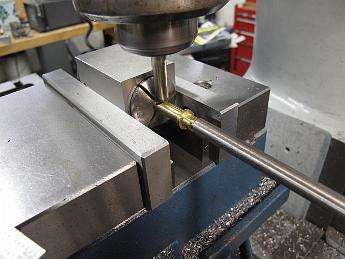
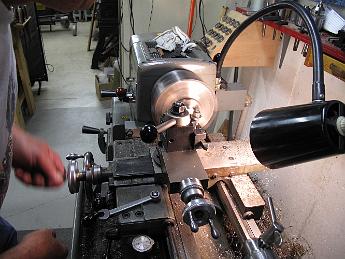
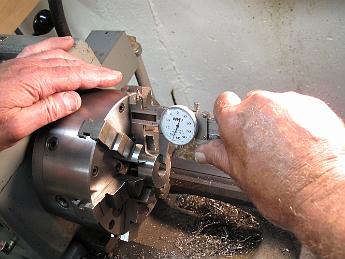
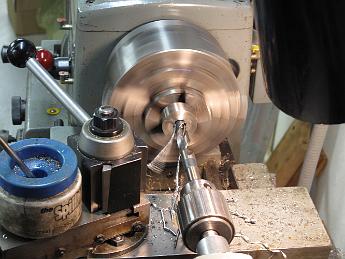
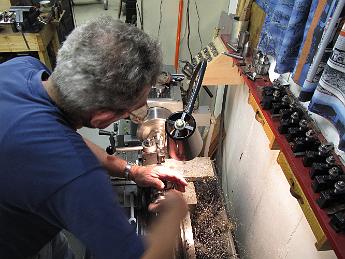
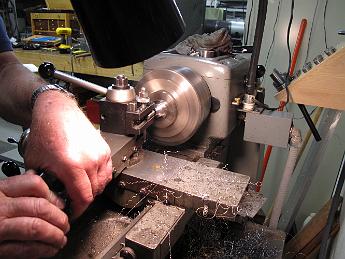
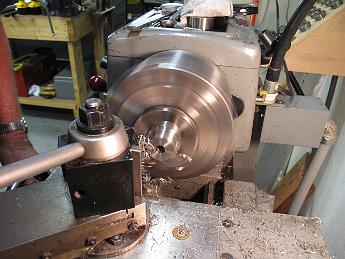
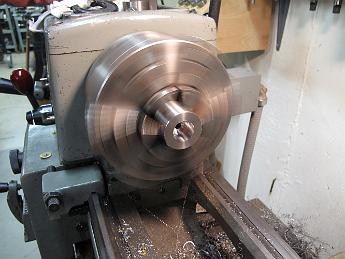
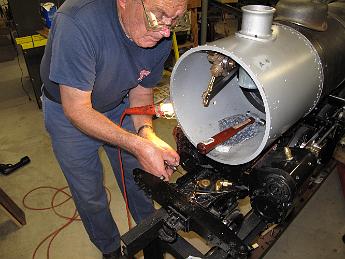
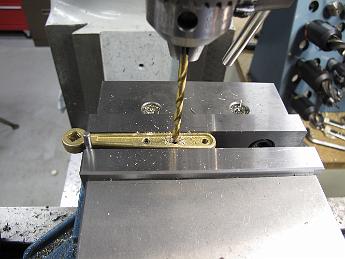
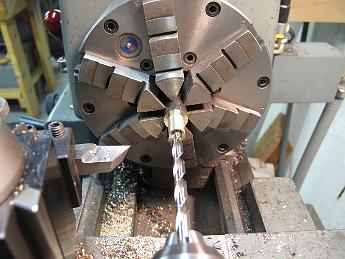
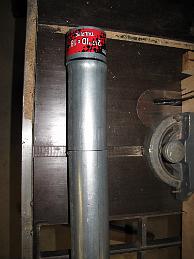
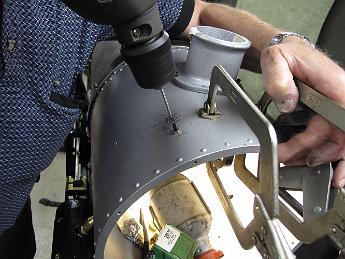
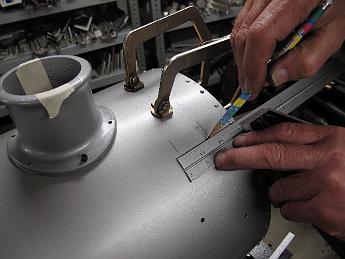
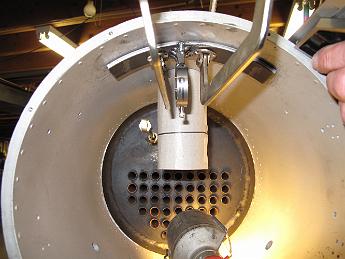
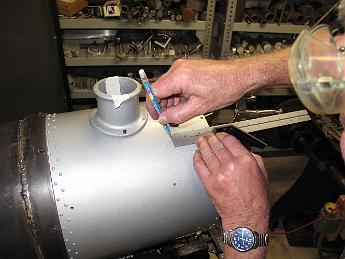
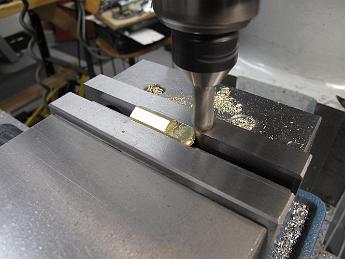
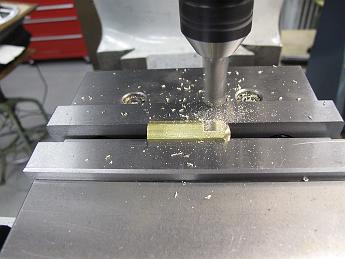
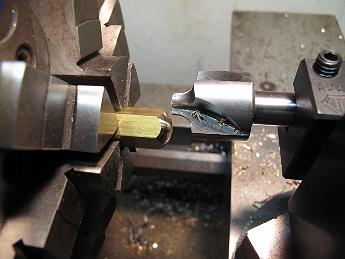
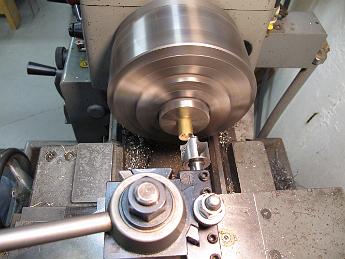
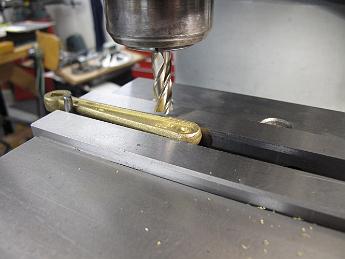
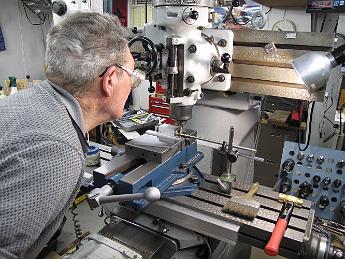
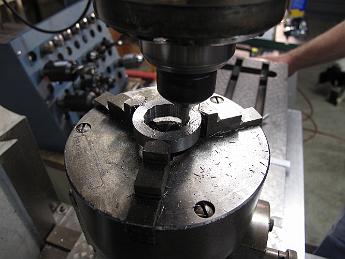
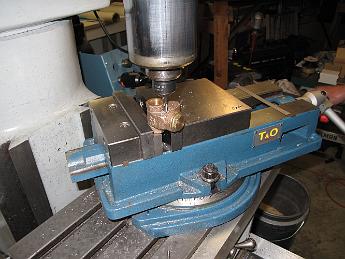
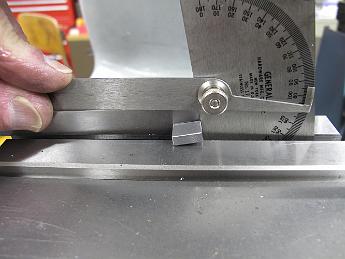
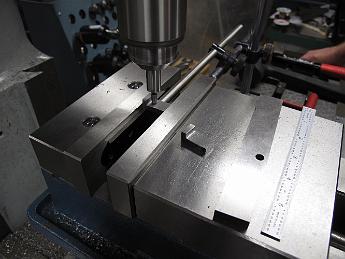
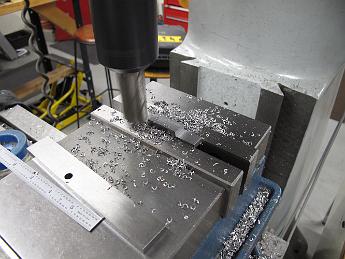
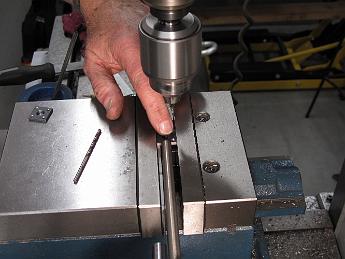
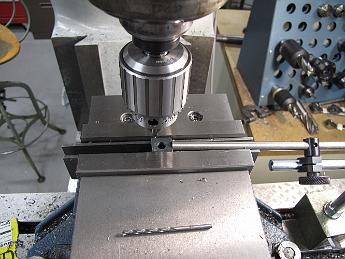
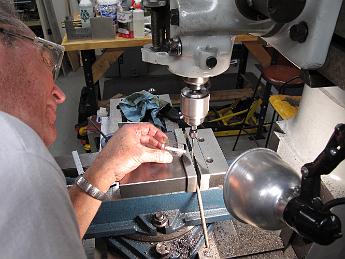
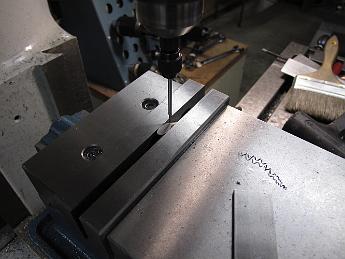
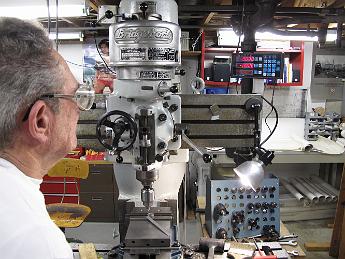
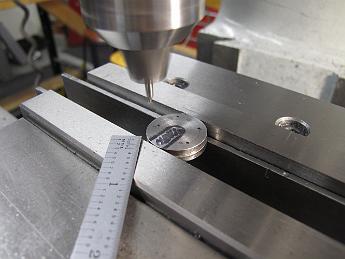
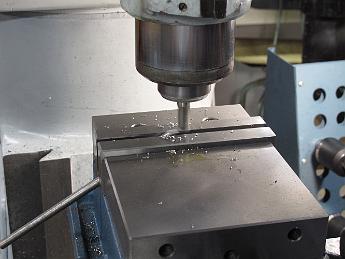
 We drill just the two holes perpendicular to the smokebox front at first.  Our holes are okay, but the cumulative errors between the rotary head, the angle of the tilt and the not quite on center part cause us to adjust the holes with a small round rat-tail file.  How to lay out the hole pattern?  I had a difficult time determining if the print was a straight overhead view (showing the curve of the smokebox) or a plan view.  In the end we used a tilting rotary chuck.  First we indicate the part to get it on center with the rotary. An adjustable chuck like the Buck 'Adjust-Tru' models would be nice here.  Then we center the mill head over center and drill the holes with a small drill.  25-Feb-09 With the six-jaw holding the end of the smokestack and a boring bar in the toolholder, we turn the recess for the petticoat per the print.  Another good days work! The smokebox shell has the smokestack, blast pipe, steam pipes, handrail and boiler step holes in it.  When we advance to the next larger cutter, we have to look around to find a carbide cutter to put in it. We can run carbide twice a fast and take a heavier cut each time, speeding each boring pass up considerably.  Unfortunately, this cutter which looked like it had enough clearance, did not perform well in this setup at all, producing lots of chatter and a lousy finish. We have to switch back to a HSS bit.  The high speed steel cutters are okay, but slow.  We can't take very large cuts - about 0.010 each pass.  Having quickly reached the size limit of the boring head with boring bars, we start a progression of larger flycutters mounted in the boring head to enlarge the hole to the 2  All the holes (not counting rivets) are done except for the smokestack hole. We add a center bolt in the blast pipe hole to help secure the pipe and start a series of larger holes for the smokestack.  After a hole is drilled, we loosen the top bridging clamp, roll the pipe and line up to the next scribe mark. Here we are drilling the holes for the side step.  With a 4  Next to make a clamping fixture.  My mill table is way too small to clamp over the shell by resting it in a slot, and I probably couldn't lift a vee-block large enough for the 12  21-Feb-09 It's lousy weather outside today, nothing can be done at the track so into the shop we go.  Using the same DRO bolt circle program, we have made marks on the rim of the shell for the steam pipe, handrails, and smokestack holes to go on the side of the shell.  Using the rim marks and the combination square, the hole locations are marked on the side.  A bit of figuring with the DRO bolt circle program and soon we are drilling and tapping the 5-40 holes for the smokebox cover.  With the bridgeport knee all the way to the bottom and the ram pulled out a bit more, we do our best to center the pipe in the mill. We discover the pipe is not completely round by about 15 thou. Not a problem since the boiler is almost 1/8  Finishing the centering operation with the dial indicator.  Next we clamp down a nice sharp piece of high speed steel in the lantern style tool post and face the end of the pipe.  11-Feb-09 This old Rahn-Larmon lathe still has the factory-issued 14  The cutting was going well until we hit a piece of sand or a stone in the aluminum which destroys the edge of the HSS cutter.  You can see the defect in the middle of the casting - the small black dot in the middle.  You can also see the smooth finish on the left and the rough finish on the right which was after the cutter edge was ruined.  We try switching to a tougher carbide bit, but it does not have enought relief clearance and the bottom edge drags on the metal, cutting poorly.
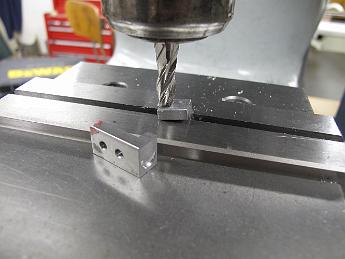
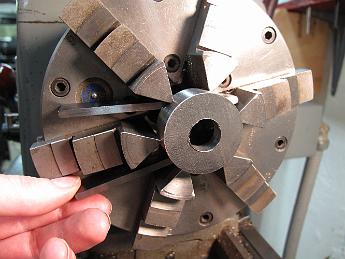
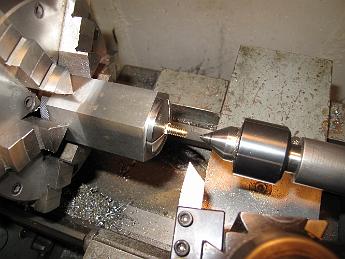
 We end up digging the stone out with a pointed chisel which allows us to finish the work with the resharpened HSS cutter.  Running in open belt, about 258 rpm, we take light cuts from the inside working out with a nice sharp high-speed toolbit.  Here's how we chose to hold the smokebox front: Using a 6  Our 'live center' is a shop-made affair of many years ago using an open-cage tapered roller bearing.  I had to dunk it in the solvent tank to clean out the gunk and dirt, then greased it up a bit.  The inner race is not captive so if you back the tailstock off, the bearing will fall out, which also gets it dirty again.  It needs to have a proper live center made.  You can spend your time making tooling or making parts, this time it was parts.  4-Feb-09 We start a new section - the Smokebox!  It's always fun to start a new one--fresh drawings to look at, new castings to puzzle out how to hold.  We put the big Rahn-Larmon lathe to use to turn the OD of the smokebox front true, and clean up the back.  Although we have the casting clamped from behind, we use the live center and a spacer block for additional pressure to keep it in place.  9-Feb-08 Thanks to my friend Tim M., who is also building a Mikado and having a boiler built, I was able to get a cut of the boiler pipe for my smokebox. It is 12